Skincare manufacturing in Thailand
Serums, moisturisers, cleansers and treatments, developed in our own lab and filled on our own line in Pak Kret, Nonthaburi. This page covers the full skincare range, how texture and actives affect what you can make, and what you need to settle before we can quote.
The skincare range
Anything here can be produced from a formula we have already tested, or developed to your brief.
Serums and essences
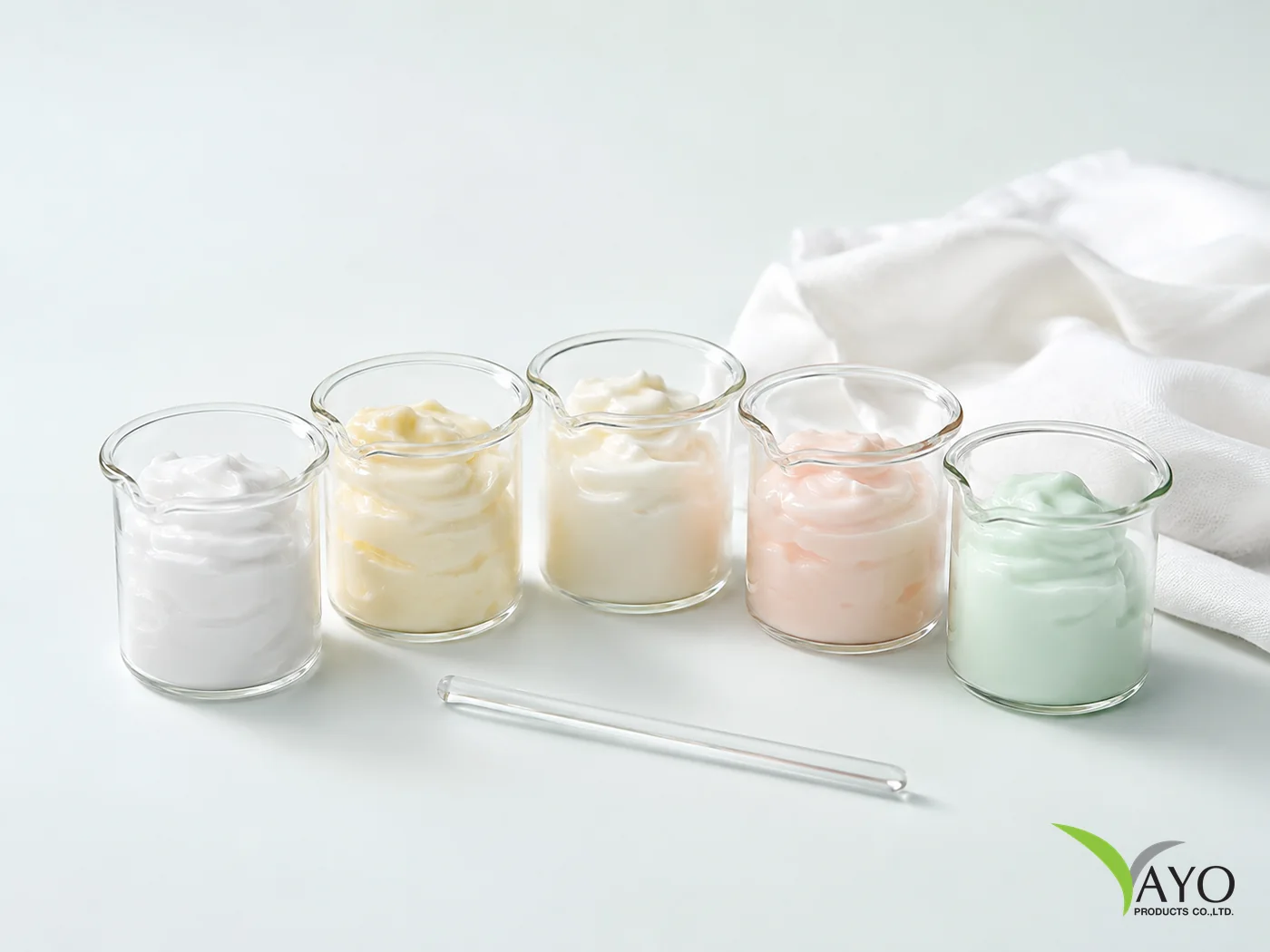
From watery essences through to gel serums and light emulsions. The texture decision matters more than most brands expect — it changes how the product feels, how it layers, and what packaging it needs.
Moisturisers
Day and night creams across the full weight range. See the cream manufacturing page for the detail.
Cleansers
Foaming cleansers, cleansing gels and milk cleansers for face and body, including formulas within our halal certification scope.
Masks and treatments
Wash-off masks and intensive treatments, available in jars, tubes or single-use sachets.
Sunscreen
Face and body sun protection. Protection figures on a label carry legal obligations, so this has its own page.
Brightening products
A major category across Southeast Asia, and a tightly regulated one when it comes to claims. Read about claims and limits →
How a skincare formula actually gets made
The process is the same whether you are adapting one of ours or starting from nothing. What changes is how many rounds it takes and what it costs.
- Brief — what the product is for, who buys it, what texture and finish you want, which actives you want to feature, and which market it is going to. Reference products help enormously; bring one you like and one you do not.
- Lab work — our team builds the formula, or adapts an existing base. Ingredient choice is constrained by your destination market's rules from this point onward, which is why we ask about the market first.
- Samples — you test them properly, in real use, not just on the back of a hand in a meeting. Then we adjust. Several rounds is normal and is not a sign that anything is wrong.
- Stability — a formula has to survive its shelf life in real conditions, not just look right in week one. Discuss the testing you need at the start; it takes time and cannot be compressed at the end.
- Sign-off, then production — nothing is manufactured until you have approved a physical sample.
Active ingredients — what to think about
Actives are usually where a brand's story lives, and where the budget disappears if nobody is watching.
| Consideration | What it means in practice |
|---|---|
| Cost scales with how much you actually use | A premium active at a token concentration adds cost to your bill without adding much to the product. Decide whether an ingredient is there to work or there to appear on the label, and be honest with yourself about it. |
| One or two heroes beat a long list | Customers recognise a small number of ingredient names. A list of fifteen actives raises your cost and communicates nothing. |
| Permitted use varies by market | An ingredient that is fine in Thailand may be restricted or banned in another market, or allowed only up to a certain concentration. This is the main reason we ask which market you are selling into before development starts. |
| What you may claim is regulated separately | Containing an ingredient does not entitle you to claim a result. Cosmetic claims are limited by law, and the limits differ by country. |
| Some actives are difficult to keep stable | Certain popular actives degrade with light, air or time. That constrains your packaging and your shelf life, so it is a formula decision and a packaging decision at once. |
Quality control
Retained samples
A sample from every production lot is kept under our Bulk Retain system with its product code, lot number, production date and expiry, signed by the inspector.
Halal scope
Certified by the Central Islamic Council of Thailand, registration กอท.ฮล. V597/2569, covering the products applied for. Tell us early if your product needs it.
Open to inspection
Book ahead and come and see the lab, the line and the QC records for yourself. We think that is worth more than a logo on a web page. Our standards →
Skincare manufacturing questions
Can you match an existing product?
How many sample rounds are normal?
Who owns a formula you develop for me?
Do you do stability and safety testing?
What is the minimum order?
Describe the product you have in mind
Texture, actives, market and budget. We will tell you what is realistic — free, no obligation.