
Body cream and body lotion manufacturing
Body products are a different manufacturing problem from facial skincare: bigger fills, thinner textures, larger packaging, and a customer who goes through the product far faster. That changes the economics in your favour, and it changes what you should be optimising for.
Body care from light lotions to rich butters
- Body lotions — light, fast-absorbing textures for daily use, usually in pump bottles. The volume category in most markets.
- Body creams and butters — richer textures for dry skin and for a more premium position, usually in jars.
- Perfumed lotions — where the fragrance is the product. Fragrance choice drives both the cost and the repeat purchase, so it deserves proper sampling time.
- Brightening body formulas — a large category in Southeast Asia with strict rules on what the label may say. Read about claims →
- Body scrubs and spa products — physical and treatment scrubs for retail and for spa operators.
- Massage and treatment oils — aroma and massage oils, often bought by spas in bulk rather than by retail customers.
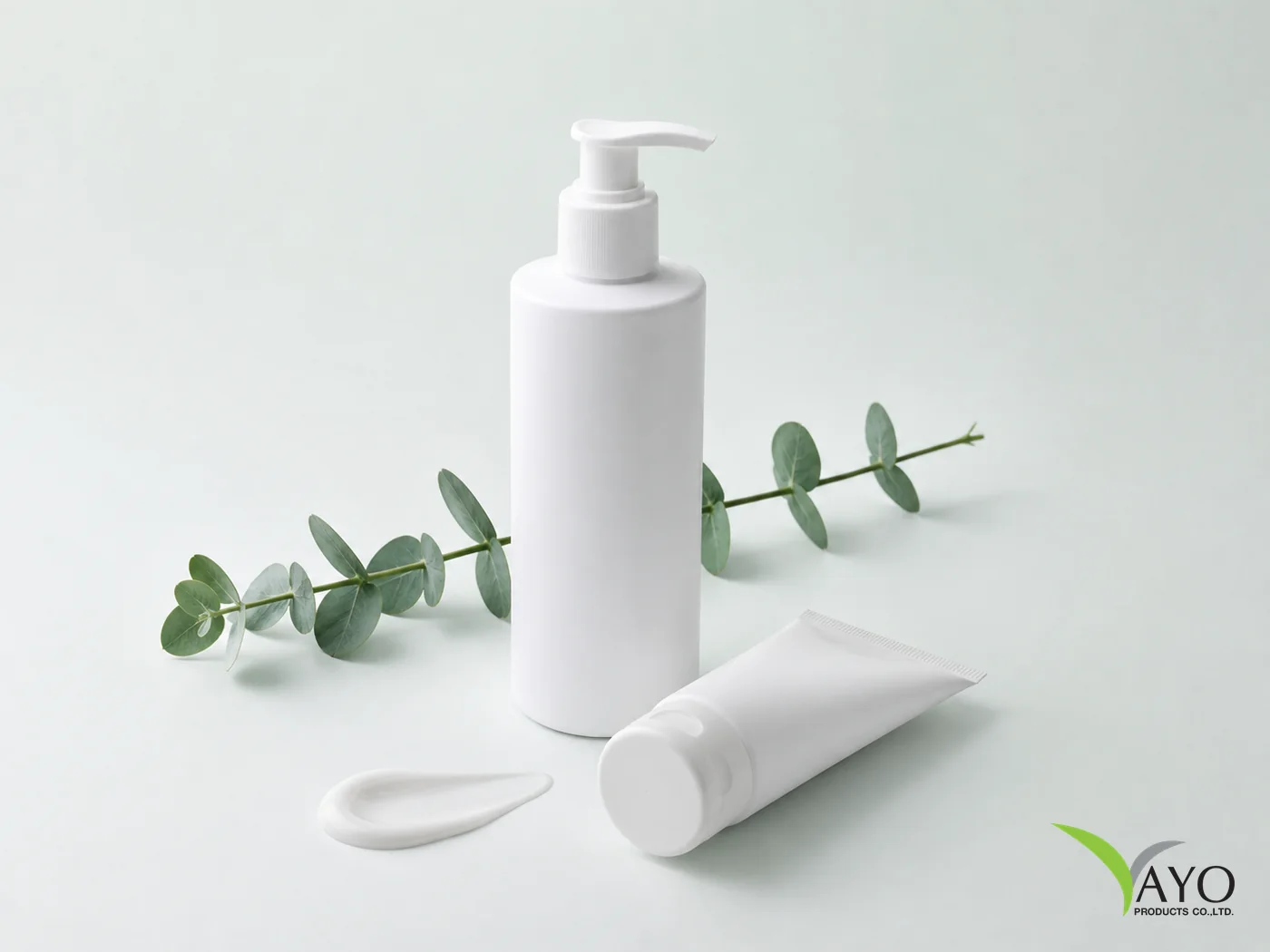
Why body care behaves differently
Four things change compared with a facial product, and all four affect your numbers.
Fill volume is much larger
A body lotion is often 200–500 ml against 30–50 ml for a facial cream. The formula cost per unit rises accordingly, so an expensive active that was affordable in a face cream may not be affordable here.
Customers finish it faster
Body products get used up in weeks rather than months, which means repeat purchases sooner. That makes fragrance and how the product feels on skin more commercially important than the ingredient list.
Packaging is bulkier
Larger containers cost more per unit, take up more space in storage, and cost more to ship. If you are exporting, this is where freight cost starts to matter.
Price expectations are lower
Customers accept a high price per millilitre for a serum and not for a body lotion. Margin comes from volume and from repeat purchase, which means controlling unit cost matters more here than anywhere else in the range.
Packaging options
Packaging is often the biggest single cost in a finished body product, and it carries its own minimum order quantities from the supplier and the printer.
| Format | Suits | Trade-off |
|---|---|---|
| Sachet | Samples, travel sizes, hotel amenities, market testing | Lowest cost and lowest minimum order, but wrong for a premium daily product. Sachet manufacturing → |
| Tube | Mid-size lotions and creams, travel-friendly retail | Reasonable unit cost, protects the product well, less shelf presence than a bottle. |
| Pump bottle | Everyday body lotion, the volume format in most markets | Convenient and familiar to customers, but a higher unit cost and a higher packaging minimum order. |
| Jar | Rich creams and butters, premium positioning | Best shelf presence and the highest cost. Also the heaviest to ship. |
Fragrance
In body care, fragrance is not a detail. It is frequently the reason a customer buys the product a second time.
Test it on skin, over hours
A fragrance smells different from the bottle, on application, and four hours later. Judge samples the way a customer will experience them, not the way a buyer smells them in a meeting.
Strength is a decision, not an accident
How strongly the product is fragranced is something you specify. Markets differ considerably in what they consider pleasant versus overwhelming.
It affects cost and regulation
Fragrance materials vary widely in price, and some are restricted or require declaration on the label in certain markets. Another reason we ask which market you are selling into before we develop anything.
Body care questions
What is the minimum order for body lotion?
Can I use the same formula in different sizes?
Can you supply spas and hotels rather than retail?
How long does production take?
Get a body care quote
Tell us the product, the size, the packaging and the budget. Free assessment, no obligation.