Cream and serum sachet manufacturing
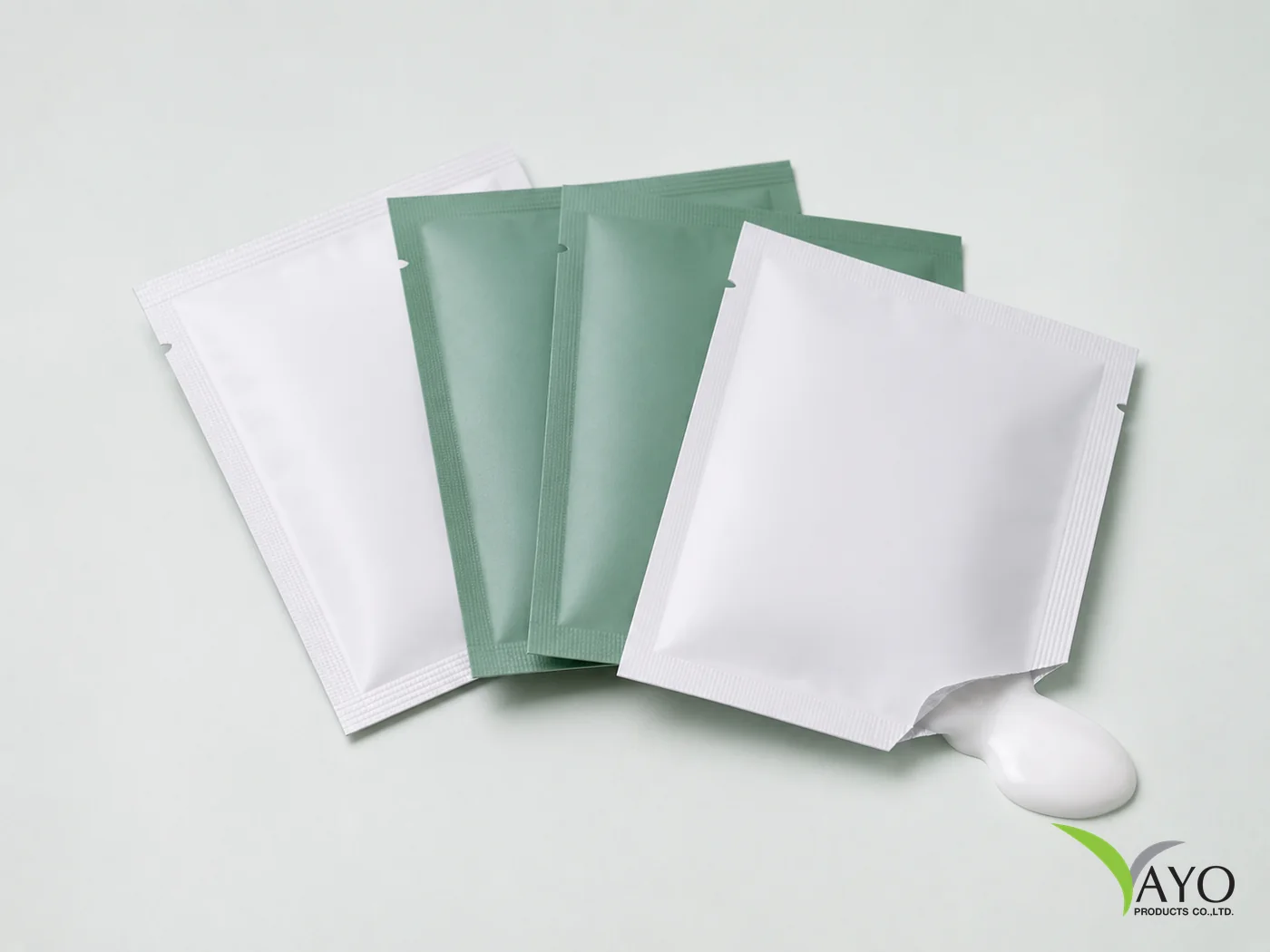
Sachets are the cheapest way to put a real product in a customer's hand. Lower minimum order, lower packaging cost, and light enough to post. For a new brand testing whether anyone actually wants the product, this is usually where we suggest starting.
The cheapest honest way to test a market
Most new brands lose money not on the formula but on packaging they committed to before they knew whether the product would sell. A jar or pump bottle carries a high unit cost and a high minimum order from the packaging supplier, and the printing has its own minimum on top. A sachet strips both of those down.
- Lowest packaging cost per unit — the film costs a fraction of a jar or a pump bottle, so more of your budget goes into the formula itself.
- Lowest minimum order — you are not committing to thousands of moulded containers before you have a single customer.
- Cheap to ship and to give away — light and flat, which matters for postage, for trade shows, and for bundling free samples with other orders.
- Real product, real feedback — unlike a mock-up, people actually use it, so what they tell you afterwards is worth something.
What we fill into sachets
Essentially the same formulas we fill into jars and bottles — the packaging changes, the product does not.
Facial creams
Moisturisers and treatment creams in single-use portions. Common for trial sizes and for markets where customers buy day by day rather than by the jar.
Serums
Watery and gel serums. Sachets suit serums well because a single dose is genuinely a single use.
Body creams and lotions
Larger fill volumes for body products. Popular as travel sizes and hotel amenities.
Masks and treatments
Wash-off masks and intensive treatments, where a single-use format is what the product wants to be anyway.
Cleansers
Face and body cleansing products in trial portions.
Spa products
Scrubs and treatments portioned for a single treatment, which is how spas prefer to buy them.
What to decide before we quote
| Decision | What it affects |
|---|---|
| Fill volume per sachet | A single facial dose is very different from a body-care portion. This drives both the material cost and how many sachets your budget buys. |
| Material and finish | Sachet film comes in different constructions and finishes, which affect both the look on shelf and how well the product is protected over its shelf life. |
| Printing | Print has its own minimum quantity, set by the printer, not by us. On small runs this is often what sets your true minimum order. |
| Formula | A stock formula keeps cost and lead time down. A custom formula raises both, and usually raises the minimum order as well. |
| Destination market | Determines the labelling rules and what registration you will need. Thailand means Thai FDA notification; elsewhere means that country's own regime. |
A starting budget of around 30,000 THB is realistic for launching with sachets. How many units that produces depends on every row in the table above — send us the specification and we will calculate it for your case.
Where sachets are the wrong choice
They are not right for everything, and it is cheaper to hear that now.
Premium positioning
If your price point and your story depend on the product feeling substantial when a customer picks it up, a sachet works against you. Use sachets as samples alongside the real pack instead.
Products used daily for months
A moisturiser someone applies twice a day is annoying in single-use form and generates a lot of waste. Sachets suit trials, travel and treatments better than daily staples.
Markets that regulate packaging waste
Some markets restrict or discourage single-use flexible packaging. Check your destination market before you commit to a format.
Sachet questions
What is the minimum order for sachets?
Can I order sachets and jars of the same product?
How long do sachets take to produce?
Can sachets be shipped internationally?
Get a sachet quote
Tell us the product, the fill size and the budget. Free assessment, no obligation.